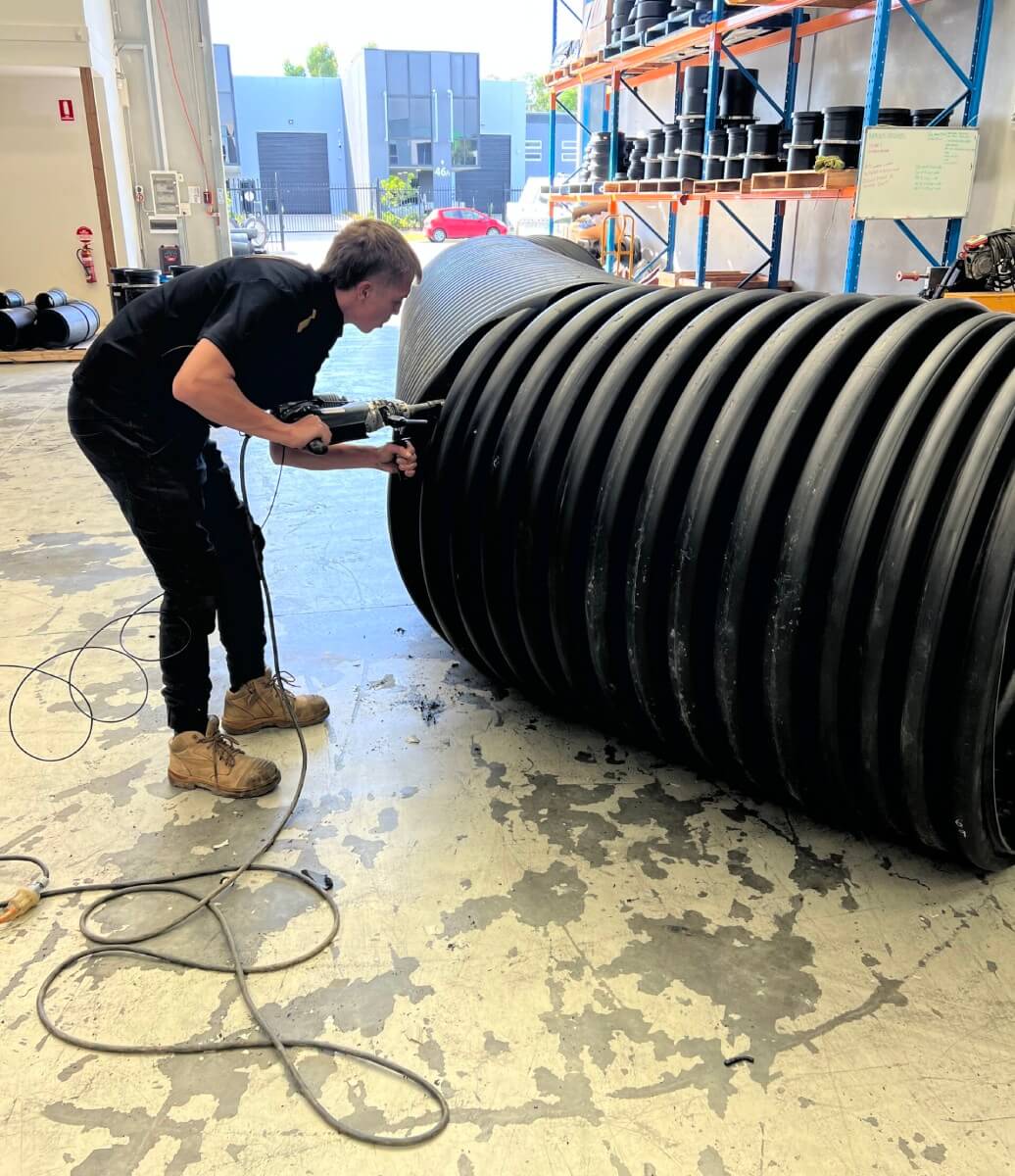


Extrusion Welding
Perfecting Extrusion Welding
Extrusion welding is a common technique used to join High-Density Polyethylene (HDPE) components in various applications, including pipes, tanks, and other fabricated products.
Here’s an overview of extrusion welding for HDPE:
Principle:
Extrusion welding involves melting HDPE material and extruding it into the joint between two HDPE components. A heated welding rod is used to heat and melt the surfaces of the components and the welding rod itself. As the molten material is extruded, it forms a continuous weld bead, creating a strong and watertight bond between the components.
Equipment:
Extrusion Welding Gun: This handheld tool houses a heating element and a feeder mechanism for the welding rod. The gun is used to heat the surfaces of the HDPE components and extrude the molten material.
Welding Rod: HDPE welding rods are typically made from the same material as the components being welded. They are fed into the extrusion welding gun and heated to the appropriate temperature for welding.
Process:
Surface Preparation: Before welding, the surfaces of the HDPE components must be cleaned and prepared to ensure proper adhesion. Any contaminants, such as dirt, grease, or moisture, should be removed.
Heating: The extrusion welding gun is used to heat the surfaces of the HDPE components and the welding rod. The temperature of the gun and the welding rod is carefully controlled to ensure proper melting and bonding of the material.
Extrusion: As the surfaces reach the melting point, the welding rod is pressed against the joint, and molten material is extruded into the gap between the components. The gun is moved along the joint, creating a continuous weld bead.
Cooling: Once the welding is complete, the welded joint is allowed to cool and solidify. This ensures that the bond between the components is strong and durable.
Advantages:
Strong and Durable welds: Extrusion welding creates a continuous weld bead that provides excellent strength and durability.Watertight seals: The molten HDPE material forms a tight seal between the components, preventing leakage.
Versatility: Extrusion welding can be used to join HDPE components of various shapes and sizes, including pipes, sheets, and profiles.
Efficiency: Extrusion welding is a relatively fast and efficient process, making it suitable for both large-scale production and on-site repairs.
Applications:
Extrusion welding is used in a wide range of applications, including: Joining HDPE pipes and fittings in water supply, sewerage, and drainage systems.Fabricating tanks, containers, and other HDPE products.Repairing damaged HDPE components, such as pipes and liners.Overall, extrusion welding is a versatile and effective technique for joining HDPE components, providing strong, watertight welds suitable for a wide range of applications